HOME/TAXONOMY/JADEITE

Feicui: The King of Jades

Named for the red and green plumage of the kingfisher, feicui is a pyroxene jade of vitreous lustre from the Uru basin of northern Myanmar. It entered China by the Yunnan–Burma roads in the seventeenth century and rose to the summit of courtly taste in the late Qing. Its connoisseurship rests on four pillars — texture, water, colour and craft — set out here in order, with the reckoning of Types A, B and C appended.

Texture & Water

Four Grades, Prized for Clarity

"Zhong" names the fineness of the fabric, "water" the depth of translucency; together they rank the stone from glass grade down to bean.

Glass GradeBOLI ZHONG

Fully transparent, fluorescing like still water; grain invisible — the crown of all feicui.

Ice GradeBING ZHONG

Limpid as river ice with faint cotton wisps; a cool inner light — the body of fine jadeite.

Glutinous GradeNUO ZHONG

Semi-translucent like glutinous rice broth; mellow and substantial — the mainstay of the market.

Bean GradeDOU ZHONG

Granular as split beans, faintly translucent to opaque; proverbially the commonest of green stones.

The Order of Colour

Green Sovereign, Six Colours in Court

Green rules the palette, judged by four words — deep, bright, true, even. Lavender is called "spring"; red and yellow fei take the secondary hues of the skin; omphacite black reads green against the light. Colours lacking an openly licensed exemplar are shown for now with a reference swatch.
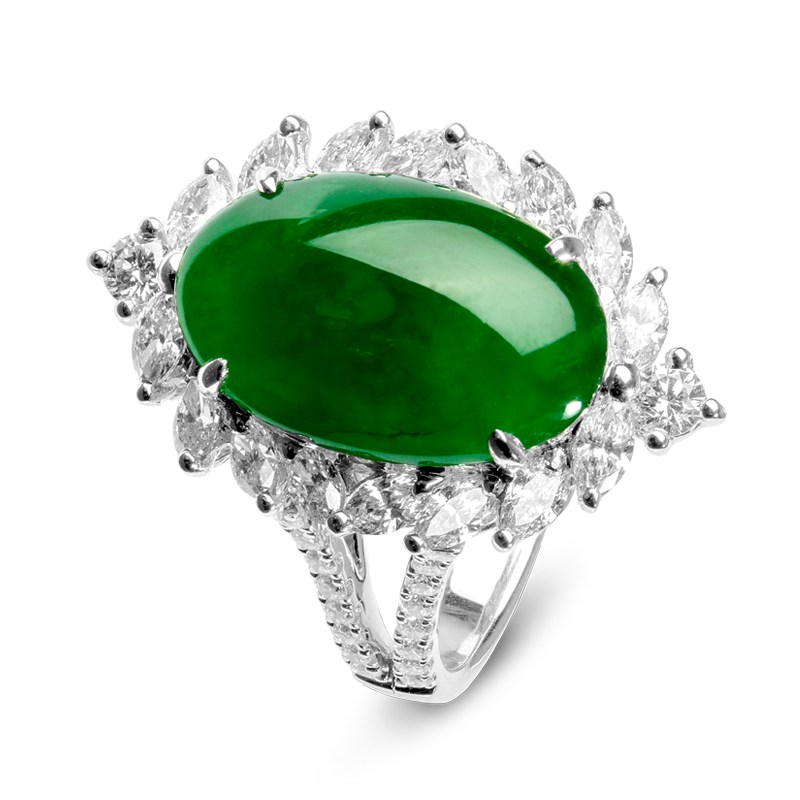
帝王绿翡翠配钻戒指

Imperial GreenDIWANG LÜ

Deep, regal green with a whisper of blue — the sovereign hue of jadeite, the colour of record-setting lots.
Imperial green jadeite and diamond ring · Sarah J Y Wong · CC BY-SA 4.0
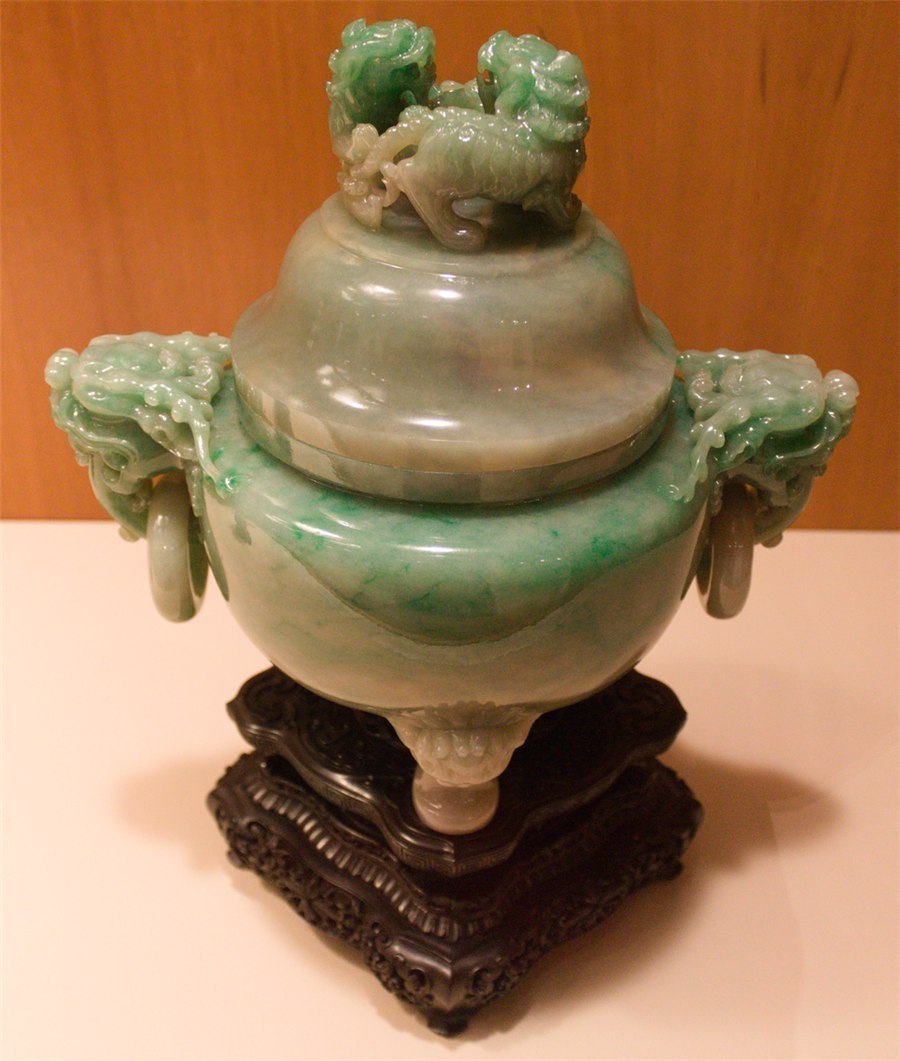
翡翠瑞兽钮盖炉

Apple GreenYANG LÜ

Bright and lively as new leaves — the very meaning of "yang", vivacity itself.
Jadeite covered censer with beast finial · Wikimedia Commons (CC0)
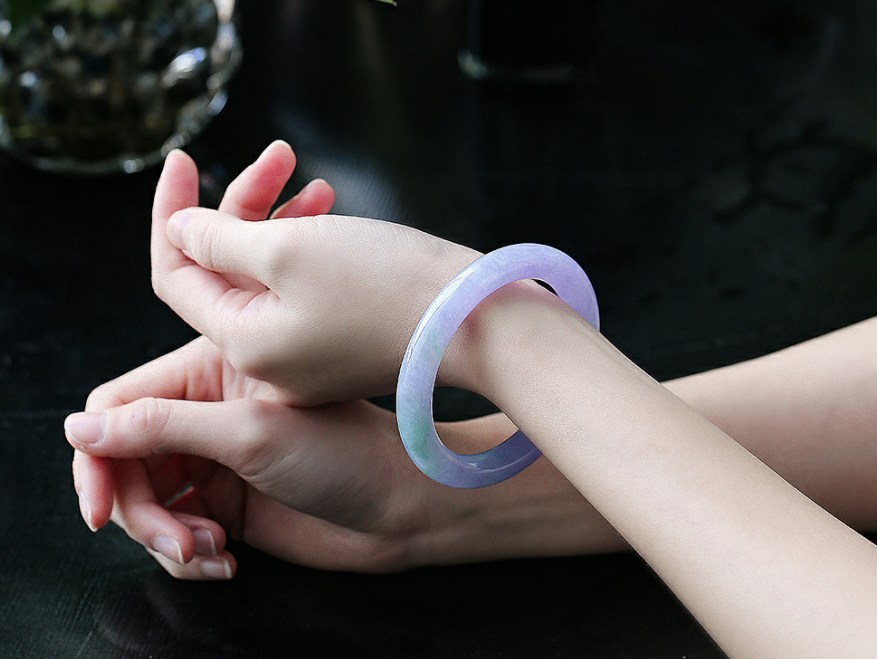
紫罗兰翡翠手镯

LavenderZILUOLAN

Pale violet like first wisteria — "spring" in the trade's idiom; pinkish, aubergine and bluish casts each with their charm.
Lavender jadeite bangle · Vivian.liang8888 · CC BY-SA 4.0
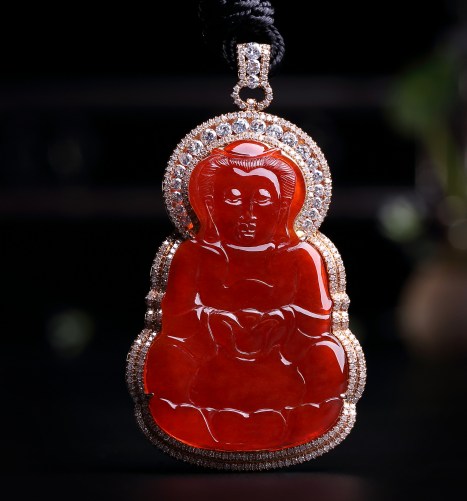
红翡观音金镶钻吊坠

Red FeiHONG FEI

Russet-red from the oxidised skin — the very "fei" of feicui's name.
Red fei Guanyin pendant, gold and diamonds · Vivian.liang8888 · CC BY-SA 4.0
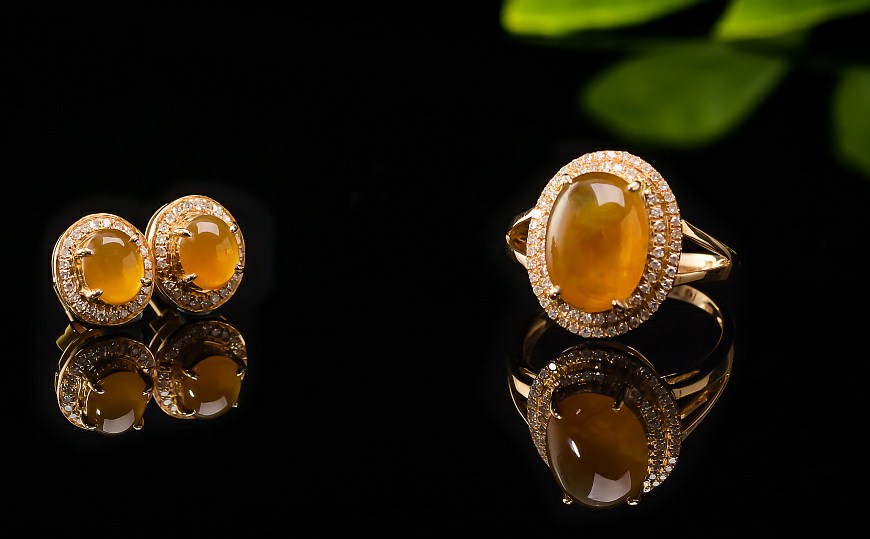
黄翡雕件

Yellow FeiHUANG FEI

Tan to orange-yellow from beneath the skin; the richest tone is praised as "chicken-fat yellow".

Yellow jadeite carving · cuizhulin · CC BY-SA 4.0

Omphacite BlackMO CUI

Coloured by omphacite: ink-black in hand, glowing green against the light — "the lover's shadow".

Reference swatch · exemplar image sought
Natural & Treated

Types A, B & C

A JadeNATURAL

Cut and polished only, untouched by chemical treatment; colour and structure wholly natural. Only Type A holds collectable value, and national standards require treated jadeite to be labelled as such.

B JadeBLEACHED & FILLED

Acid-bleached and resin-impregnated; the fabric is destroyed and the lustre degrades with time. No collectable standing.

C JadeDYED

Artificially dyed, the colour lodging in fissures; readily unmasked under magnification and spectroscopy.

For the buyer: anything labelled "feicui (treated)" or "feicui (dyed)" is Type B or C. Require a certificate from a CMA/CNAS/ILAC-accredited laboratory, check its number against the photographed piece — and remember the old counsel: never judge jade under shop light; verify in daylight.
Frequently Asked

Jadeite — Frequently Asked

01What is the difference between Type A, B and C jadeite?

Type A is natural jadeite, merely cut and polished, its colour and structure untouched — the only collectable grade. Type B has been acid-bleached and resin-impregnated: the fabric is destroyed and the lustre degrades with time. Type C is dyed, the colour lodging in fissures and readily unmasked under magnification and spectroscopy. National standards require treated material to be labelled, so any certificate reading "feicui (treated)" or "(dyed)" means B or C. Insist on a report from a CMA/CNAS/ILAC-accredited laboratory and check its number against the photographed piece.

02What are the texture-and-water grades of jadeite?

"Zhong" names the fineness of the fabric and "water" the depth of translucency; together they are jadeite's first measure of quality. From the top: glass grade (fully transparent, fluorescing, grain invisible), ice grade (limpid with faint cotton wisps), glutinous grade (semi-translucent, mellow) and bean grade (visibly granular, faintly translucent to opaque). Unlike nephrite, jadeite is prized the clearer it is.

03What is "imperial green", and how is green graded?

Imperial green is the summit of jadeite colour — a deep, regal green with a whisper of blue, which needs ice grade or better to show its worth and heads the great auction lots. Green is judged by four words: deep, bright, true, even. Below it rank apple green, lavender (called "spring" in the trade), red and yellow fei (secondary skin colours) and omphacite black, ink-dark in hand but glowing green against the light.

04Why do international reports now call jadeite "Fei Cui"?

Because "jadeite" names a single mineral, while the Chinese term covers a multi-mineral rock. At its Centenary Congress in September 2026 the World Jewellery Confederation (CIBJO) published an updated Jade Guide enthroning the pinyin term Fei Cui, defined as a granular to fibrous polycrystalline aggregate composed solely or principally of jadeite, omphacite and kosmochlor, or any combination thereof. The definition finally gives proper standing to omphacite-led "mo cui" and kosmochlor-led "dry green" material, and aligns with Hong Kong's statutory standard and mainland laboratory practice.

05When did jadeite become popular in China?

Far later than nephrite. Mined in the Uru basin of northern Myanmar, jadeite entered China through Tengchong and Ruili in the seventeenth century — hence its old name, "Yunnan jade" — reached the court under Qianlong, and rose to pre-eminence in the mid-to-late Qing, when its vitreous brilliance answered the taste of the age and the Empress Dowager Cixi's celebrated devotion drove purchase after purchase through the Imperial Household. The Jadeite Cabbage is that age's most famous witness. By contrast, China's jade tradition is over eight thousand years old, and its main body has always been nephrite.