首页HOME/历史长卷HISTORY

历史长卷 · 八千年玉脉不绝Eight Millennia, One Unbroken Vein

自兴隆洼先民琢成第一枚玉玦,至今日拍卖行落槌之声,玉的历史与中华文明相始终。本编以七个时代为纲编次八千年玉事,并特设"清末翡翠崛起"专章。各时代之详编,将随资料增补渐次展开。 From the first slit-ring ground at Xinglongwa to the fall of the auctioneer's hammer today, the history of jade runs the full length of Chinese civilisation. This volume orders eight thousand years under seven ages, with a special study of the late-Qing ascent of feicui; fuller chapters on each age will unfold as material is added.

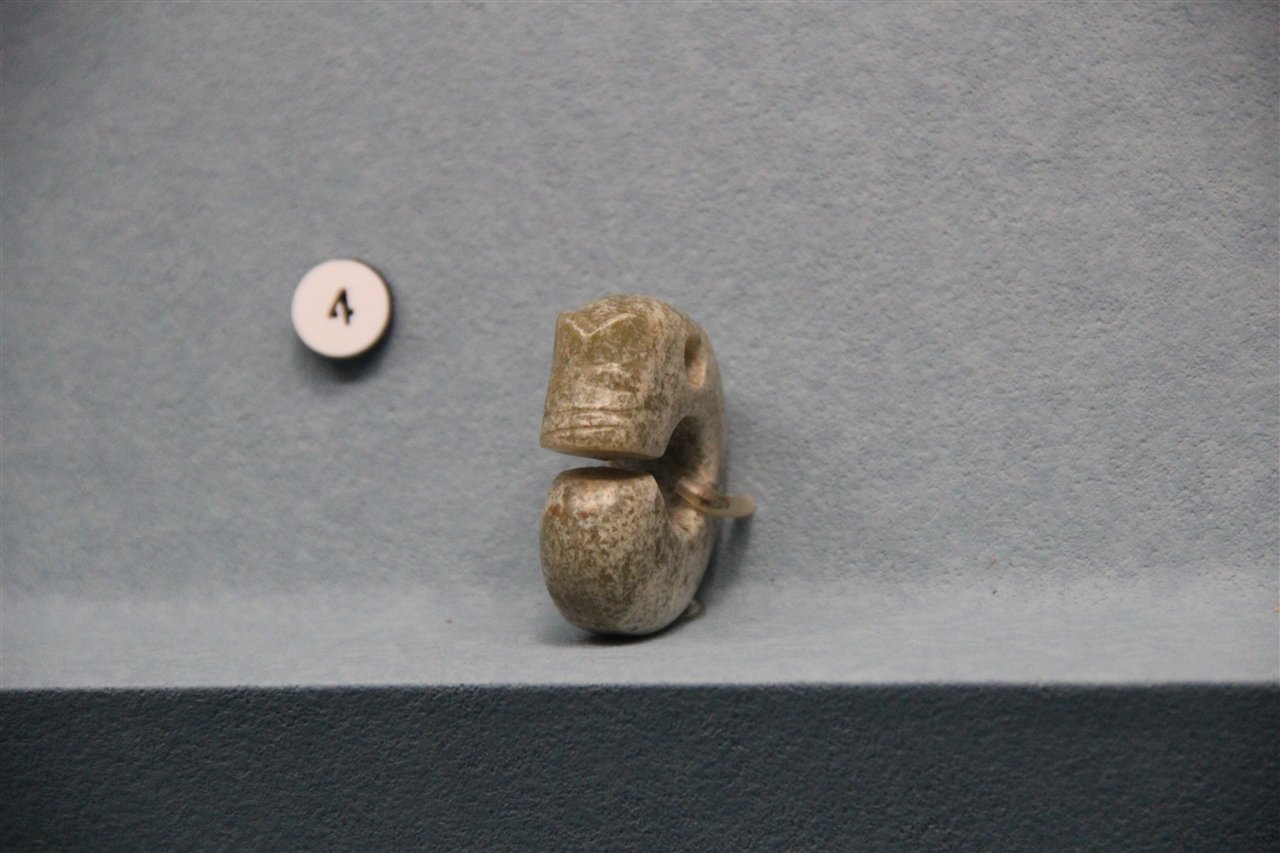
红山文化玉猪龙 Hongshan jade pig-dragon
红山文化 · 玉猪龙 — 图源 Wikimedia CommonsHongshan culture jade pig-dragon — Wikimedia Commons
新石器时代 · 约前6200—前2900年Neolithic · c. 6200–2900 BCE

玉之初曜:兴隆洼与红山First Radiance: Xinglongwa & Hongshan

内蒙古兴隆洼遗址出土的玉玦,将中国用玉史推至八千年前。红山文化的C形玉龙与玉猪龙,造型浑朴神异,被誉为"中华第一龙",确立了玉在原始信仰中沟通天地的地位。Jade slit-rings from Xinglongwa in Inner Mongolia carry China's jade record back eight thousand years. The C-shaped dragons and pig-dragons of the Hongshan culture — hailed as the "first dragons of China" — fixed jade's role as the medium between heaven and humankind.
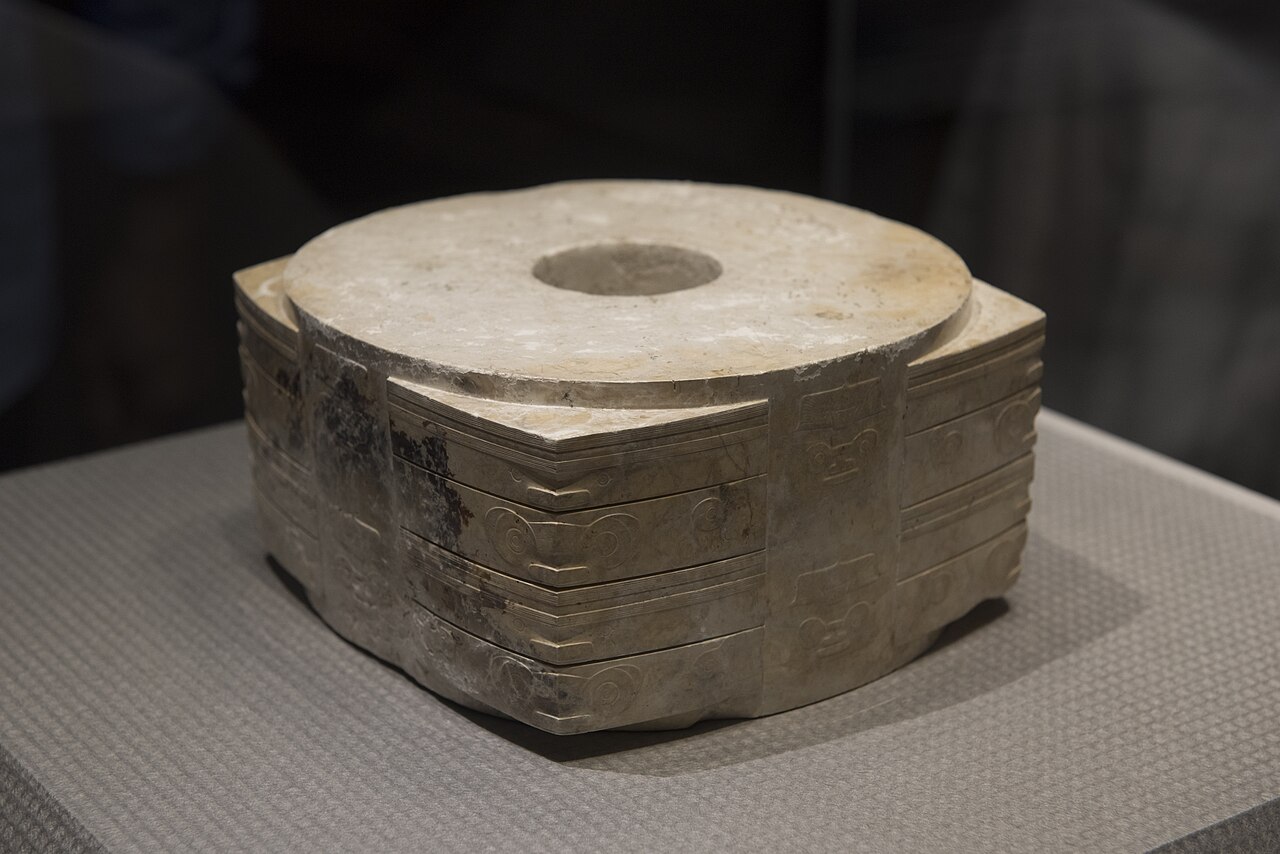
良渚文化玉琮王 Liangzhu jade cong
良渚文化 · 玉琮王(浙江省博物馆)— 图源 Wikimedia CommonsThe "Cong King", Liangzhu culture, Zhejiang Museum — Wikimedia Commons
良渚文化 · 约前3300—前2300年Liangzhu · c. 3300–2300 BCE

琮璧之制:神权与礼序Cong & Bi: Theocracy in Stone

环太湖流域的良渚文明以琮、璧、钺构建玉礼器体系,"琮王"重达六点五千克,神人兽面纹细逾毫发。良渚古城已列入《世界遗产名录》,实证中华五千年文明史。Around Lake Tai the Liangzhu civilisation built a liturgy of cong tubes, bi discs and yue axes; the "Cong King" weighs 6.5 kilograms, its man-and-beast emblem engraved finer than a hair. Liangzhu, now a World Heritage site, stands as proof of five thousand years of Chinese civilisation.
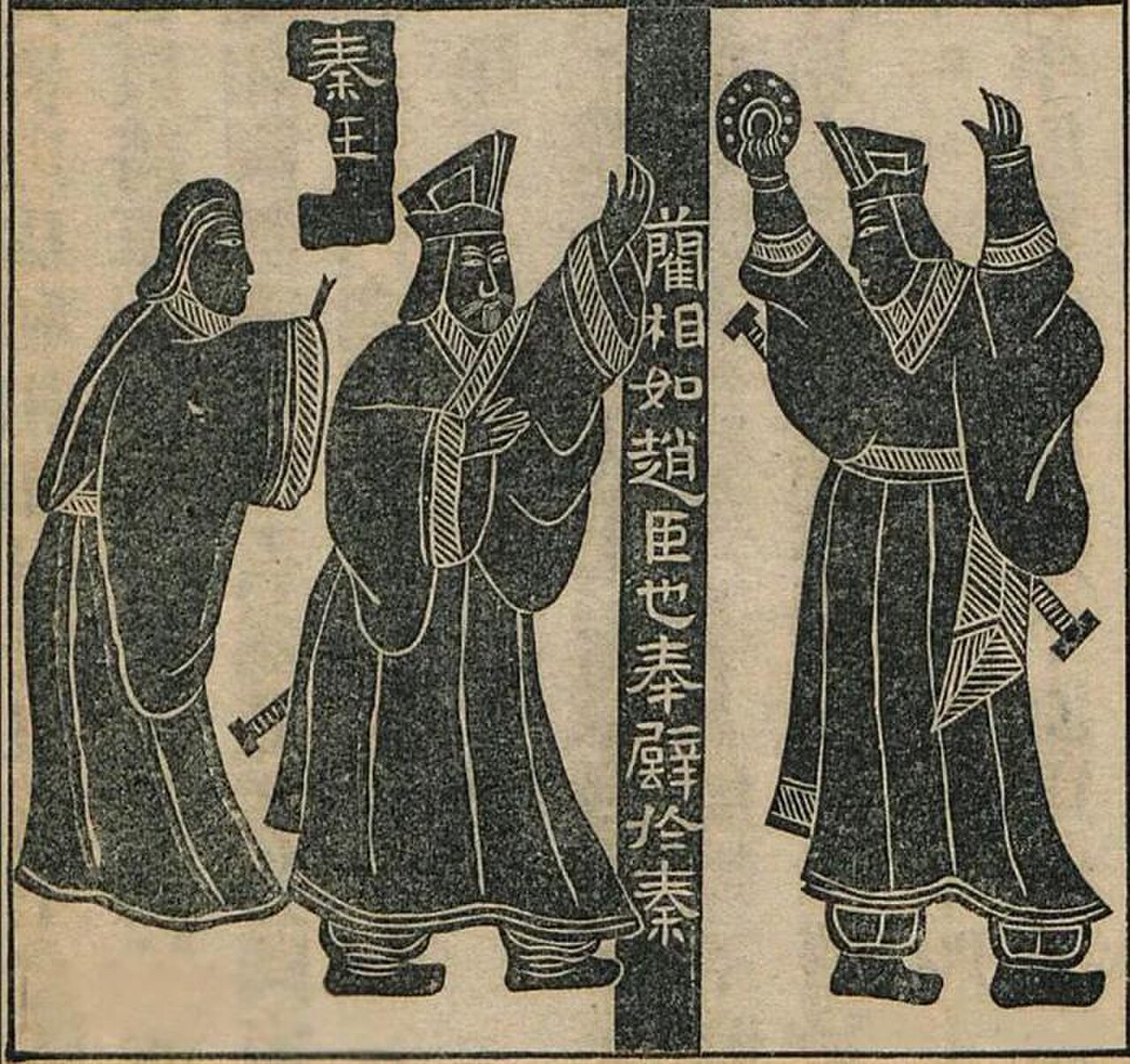
完璧归赵 汉画像石拓片 Heshibi rubbing
"完璧归赵" 武氏祠画像石 ·《金石索》— 图源 Wikimedia Commons"Returning the Jade Intact to Zhao", Wu Shrine relief — Wikimedia Commons
三代至战国 · 约前2070—前221年Three Dynasties to Warring States · c. 2070–221 BCE

礼玉时代:六器与和氏璧The Ritual Age: Six Implements & the Heshibi

《周礼》定"以玉作六器,以礼天地四方",玉成为王权与礼制的物质纲领。妇好墓出土玉器七百五十五件;及至战国,和氏璧"价值连城"、蔺相如"完璧归赵",一玉之重,系于邦国。秦并六国,相传琢和氏璧为传国玉玺,李斯篆"受命于天,既寿永昌"八字,历朝奉为天命之信物;辗转千年,五代后下落成谜,世无真影;其印文摹本见于本站首页。The Rites of Zhou decreed six jade implements "to honour Heaven, Earth and the four quarters", making jade the material charter of kingship. Fu Hao's tomb held 755 jades; by the Warring States the Heshibi disc was "worth a string of cities", and its safe return to Zhao became the proverb of statecraft itself. When Qin united the realm, tradition holds, that very stone was carved into the Heirloom Seal of the Realm, inscribed by Li Si — "Mandated by Heaven: long life and eternal glory" — token of the Mandate for a thousand years until it vanished after the Five Dynasties, leaving no true likeness; a tracing of its legend appears on this archive's front page.
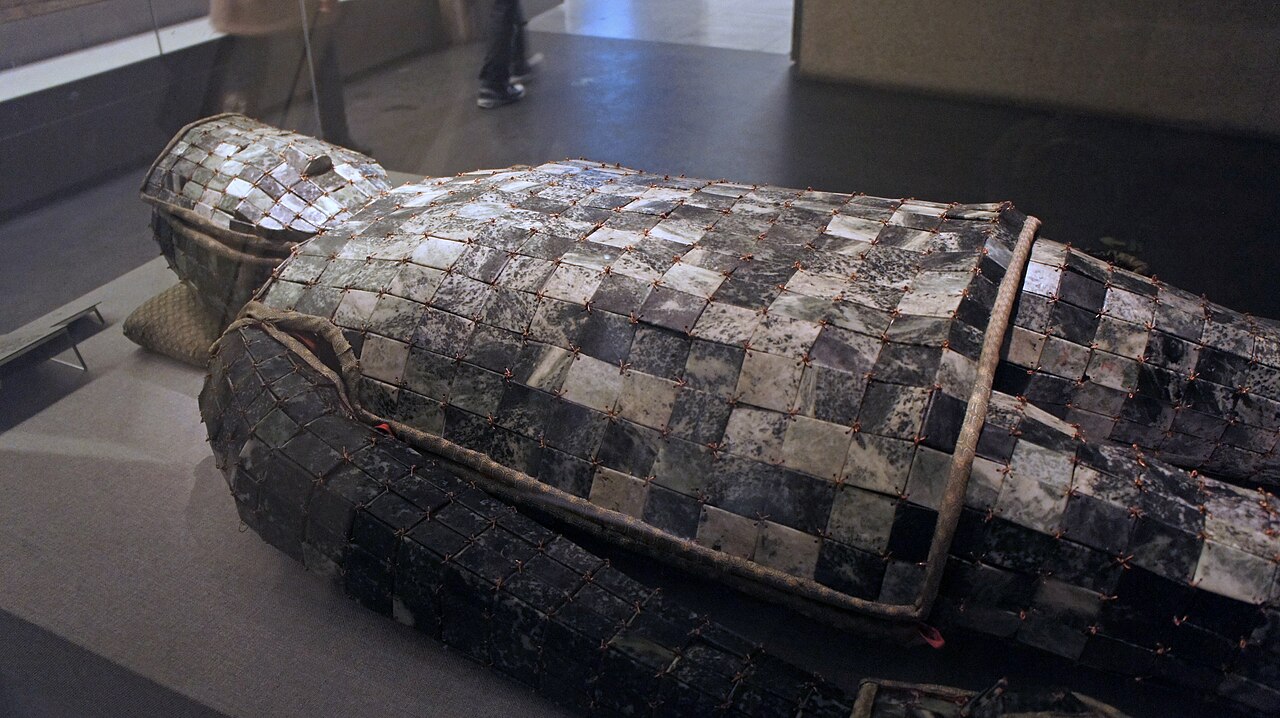
西汉金缕玉衣 Han jade burial suit
西汉 · 金缕玉衣 — 图源 Wikimedia CommonsWestern Han jade burial suit sewn with gold wire — Wikimedia Commons
两汉 · 前202—220年Han Dynasty · 202 BCE – 220 CE

金缕玉衣:事死如生Suits of Jade and Gold Wire

汉人信玉能护形魄、致不朽,葬玉之制臻于极盛。满城汉墓中山靖王刘胜之玉衣,用玉两千四百九十八片、金丝约一千一百克。丧葬之外,佩玉之风亦盛,"君子无故,玉不去身"。The Han believed jade preserved the body incorrupt, and funerary jade reached its zenith: the suit of Prince Liu Sheng at Mancheng joins 2,498 plaques with some 1,100 grams of gold thread. In life no less than death, "the gentleman, without due cause, does not part with his jade."
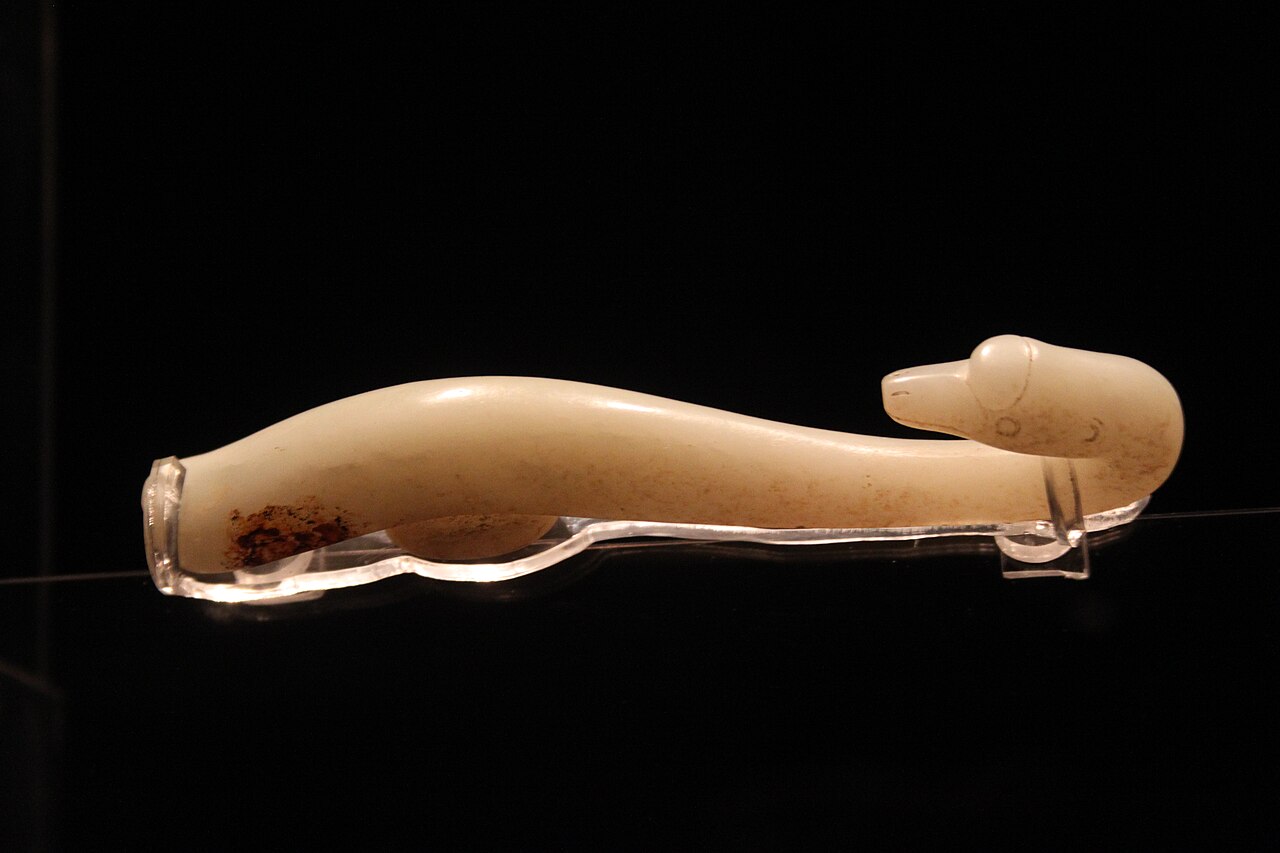
明代玉带钩 Ming jade belt hook
明 · 玉带钩 — 图源 Wikimedia CommonsMing dynasty jade belt hook — Wikimedia Commons
唐宋明 · 618—1644年Tang, Song & Ming · 618–1644

由庙堂入书斋From Temple to Scholar's Desk

唐宋以降,玉走下神坛:玉带銙定品秩,花鸟炉瓶入文房,玉成为士大夫审美生活的一部分。晚明苏州陆子冈以"子冈牌"名动天下,琢玉与书画金石合流,工匠之名始与士人并传。From Tang and Song onward jade descended from the altar: belt plaques ranked officials, censers and bird-and-flower carvings entered the studio, and jade joined the scholar's aesthetic life. In late Ming Suzhou, Lu Zigang's signed plaques fused lapidary art with calligraphy and painting — the first carver whose name passed down beside the literati's.
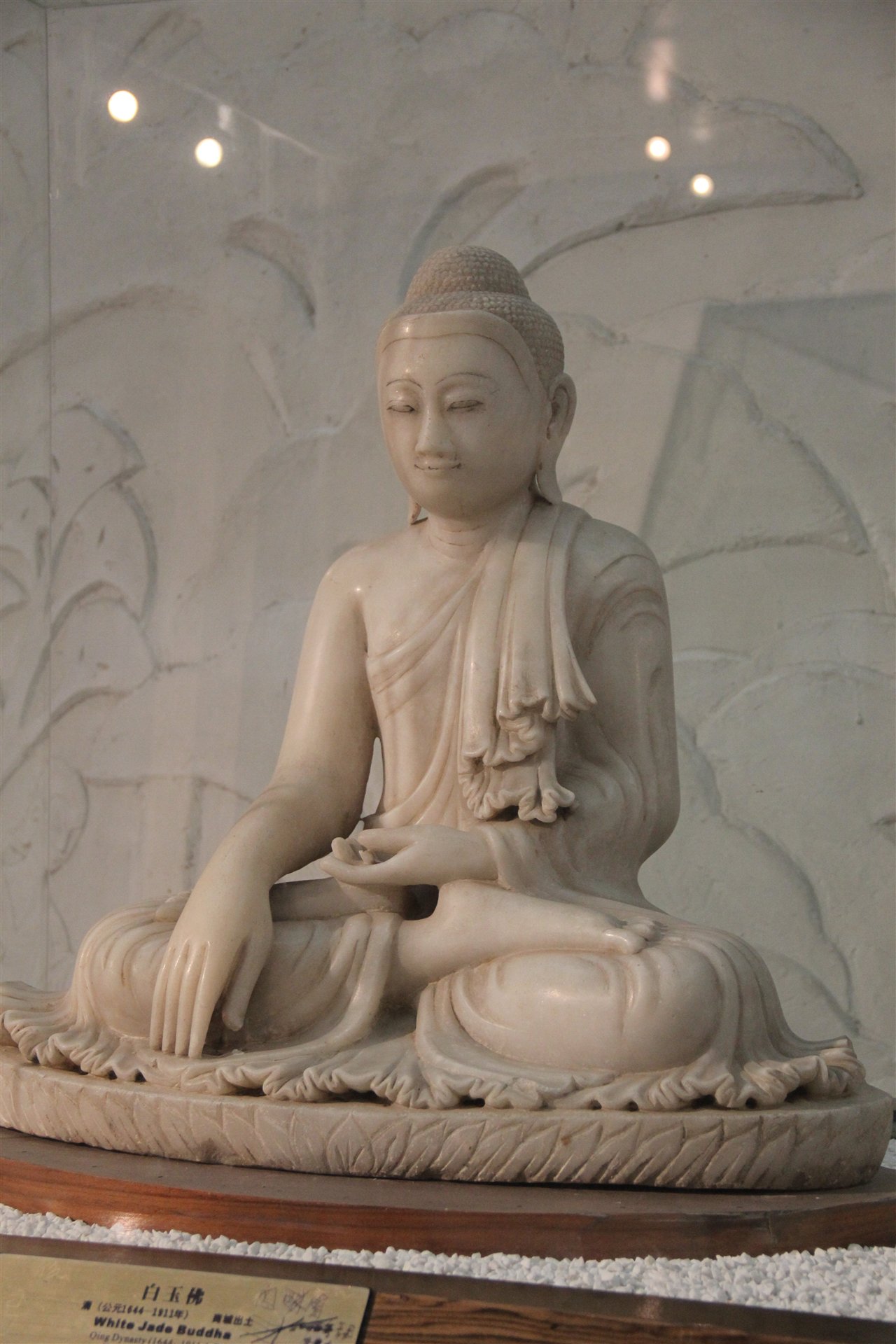
清代白玉佛 Qing white jade Buddha
清 · 白玉佛坐像 — 图源 Wikimedia CommonsQing dynasty white jade Buddha — Wikimedia Commons
清 · 乾隆盛世 · 1736—1795年High Qing · Qianlong Era · 1736–1795

乾隆工:中国玉作之巅The Qianlong Workshop: Apex of the Craft

平定回部后和田玉贡道大开,宫廷玉作臻于化境,世称"乾隆工"。《大禹治水图》玉山重逾五吨,琢制历十余年;痕都斯坦薄胎玉器"莹薄如纸",帝王亲题诗文以志。With the Hotan tribute road secured, the palace workshops attained a finish posterity calls "Qianlong work". The jade mountain "Yu the Great Taming the Waters" exceeds five tonnes and took a decade to carve; Hindustan-style vessels were ground "thin as paper", and the emperor inscribed poems upon them in his own hand.
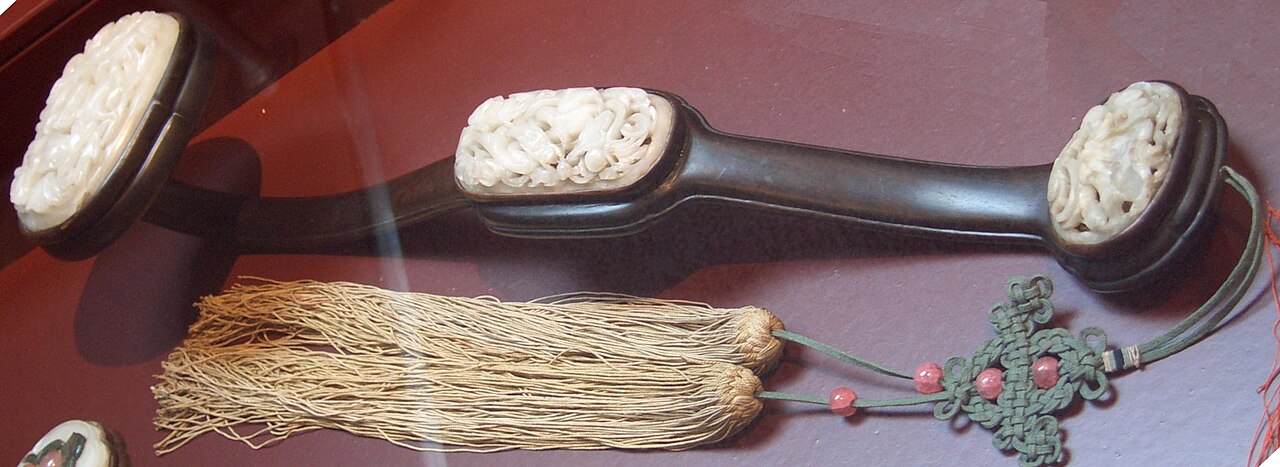
玉如意 Jade ruyi sceptre
清 · 玉如意 — 图源 Wikimedia CommonsQing dynasty jade ruyi sceptre — Wikimedia Commons
民国至当代 · 1912年至今Republic to Present · 1912 –

旧藏散聚 · 新章方启Collections Scattered and Regathered

清社既屋,宫藏流散,玉入市肆与海外公私诸馆,反促玉学研究之兴。当代以国家标准立鉴定之规,以拍卖市场定流通之价,以科学考古续写源流;玉雕列入国家级非物质文化遗产,八千年玉脉,于斯为盛。With the fall of the Qing the palace collections dispersed — into the market and into museums at home and abroad — and modern jade scholarship rose in their wake. Today national standards govern authentication, the auction room sets the price of circulation, and scientific archaeology keeps extending the record; jade carving is inscribed as national intangible heritage, and the eight-thousand-year vein runs as full as ever.
专章 · 清末翡翠之崛起Special Study · The Late-Qing Ascent of Feicui

翠色倾城:一种玉石的两百年跃升A Kingdom for Green: The Two-Century Rise of Jadeite

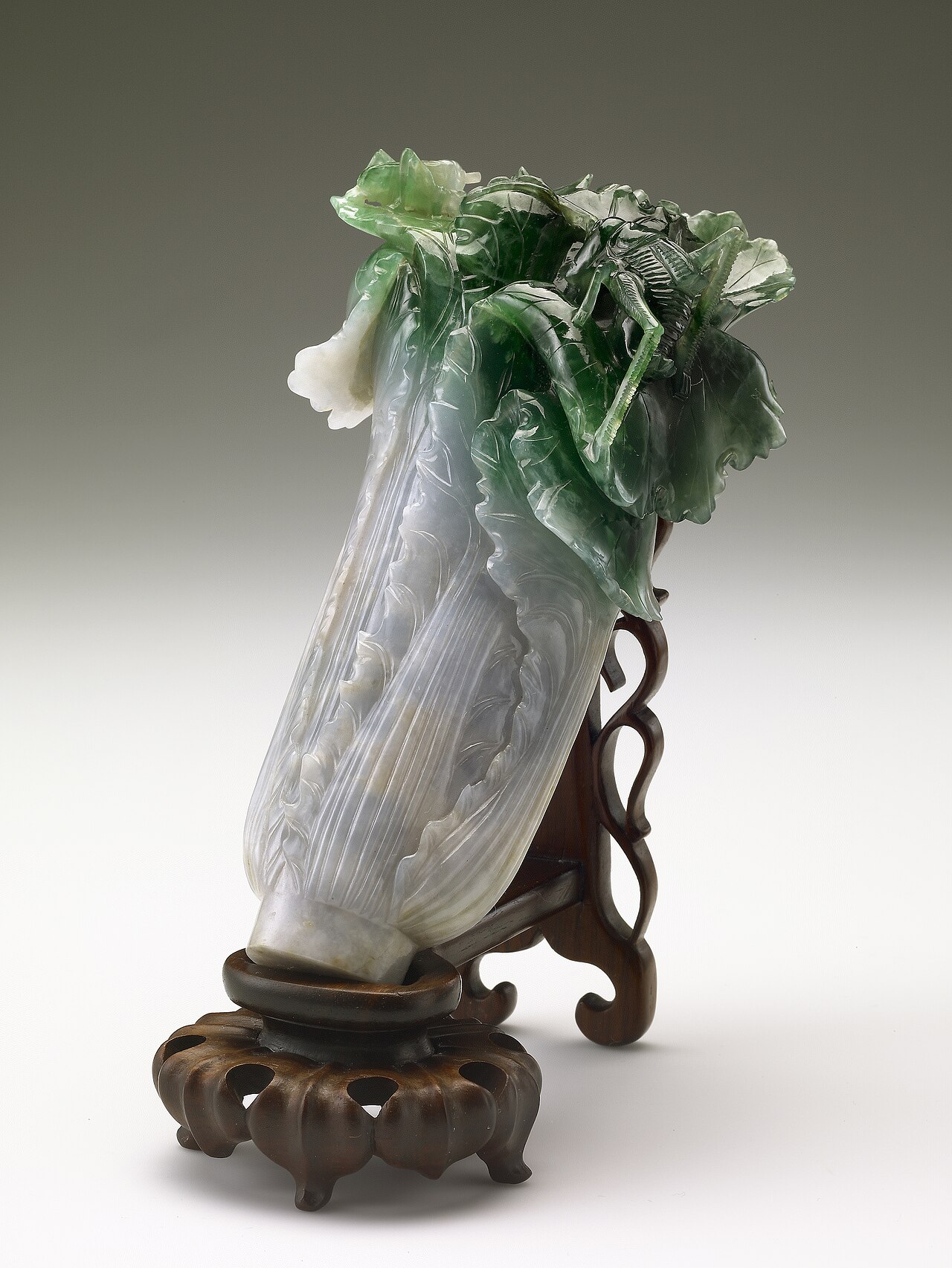
翠玉白菜 Jadeite Cabbage, National Palace Museum
清 · 翠玉白菜(台北故宫博物院)— 图源 Wikimedia CommonsThe Jadeite Cabbage, Qing dynasty, National Palace Museum — Wikimedia Commons

自滇缅商路,至紫禁之巅From the Burma Road to the Forbidden City

翡翠产自缅甸北部雾露河流域,明末清初经腾冲、瑞丽入华,故旧称"云南玉"。乾隆年间渐入宫廷;至清中晚期,其莹透玻璃光泽与浓艳翠色契合时代审美,身价陡升,终与和田玉分庭抗礼。Mined in the Uru basin of northern Myanmar, jadeite entered China through Tengchong and Ruili in the seventeenth century — hence its old name, "Yunnan jade". It reached the court under Qianlong; by the mid-to-late Qing its vitreous brilliance and saturated green so answered the taste of the age that it rose to stand level with Hetian nephrite itself.

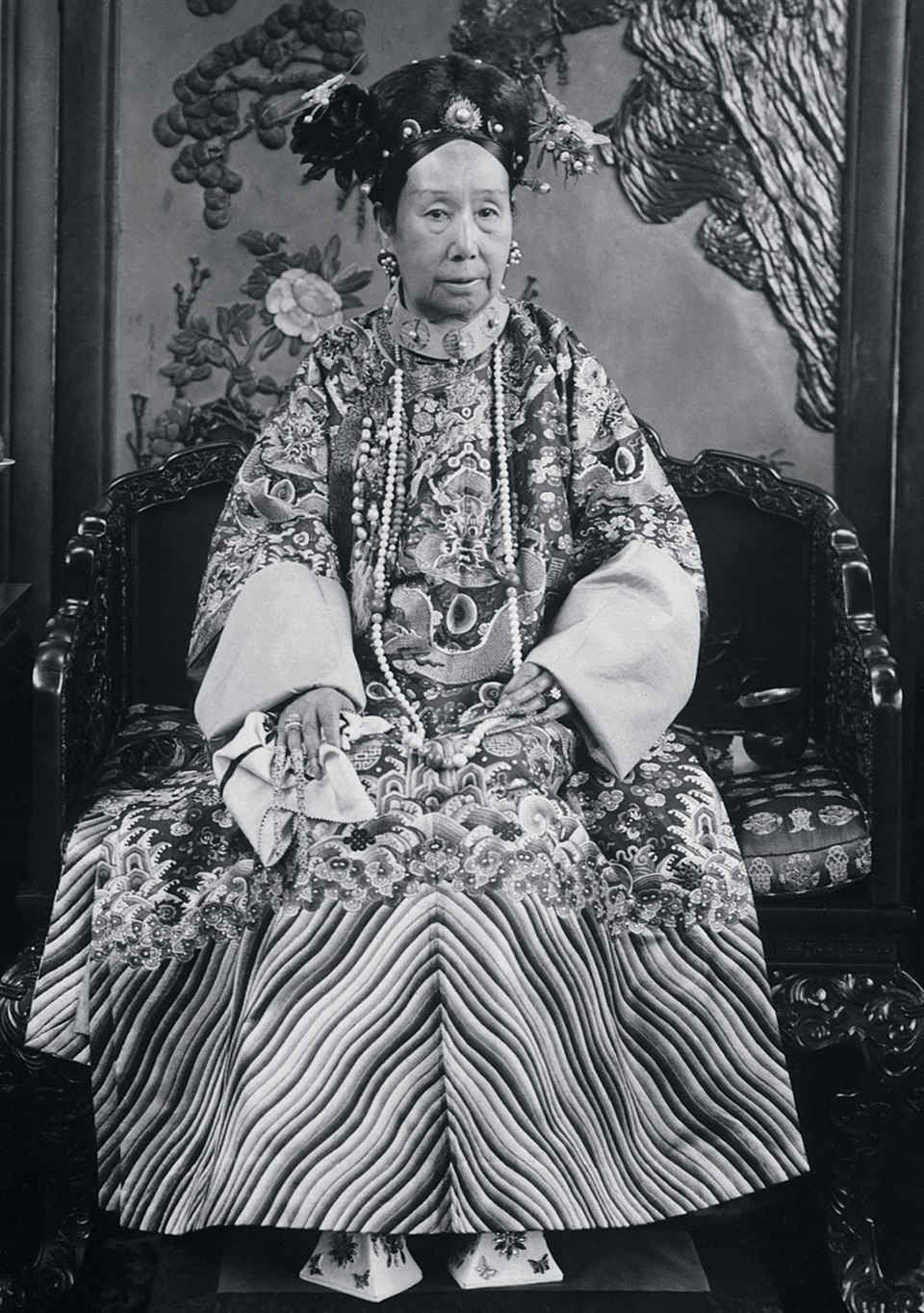
慈禧太后嗜翠尤深,翡翠扁方、耳环、戒指备于两宫,内务府采买绿玉之档案不绝于册。上有所好,下必甚焉——京沪粤三地翠肆骈兴,"黄金有价玉无价"自此专指翡翠上品。传世之翠玉白菜,以紫绿巧色琢就白菜螽斯,寓意清白多子,为此一时代最负盛名的见证。The Empress Dowager Cixi's devotion to the stone was proverbial: jadeite hairpieces, earrings and rings filled the palace inventories, and the Imperial Household archives record purchase after purchase of "green jade". Where the throne led, the empire followed — jade houses multiplied in Beijing, Shanghai and Canton, and "gold has a price; jade has none" came to mean fine feicui above all. The Jadeite Cabbage, carved from a single violet-and-green stone into cabbage and katydid — purity and posterity — remains the most celebrated witness of that age.

慈禧太后 Empress Dowager Cixi
慈禧太后(1835—1908)Empress Dowager Cixi (1835–1908)
清末翡翠风尚之枢纽人物。其随葬翠玉之奢,见载于《爱月轩笔记》诸书,虽细目存疑,翡翠因之而贵则为史家共识。The pivotal patron of late-Qing jadeite fashion. Accounts of the jadeite treasures buried with her, though disputed in detail, agree on the essential: it was under her taste that feicui became imperial.
翡翠分类与品鉴 · 翡翠专编GRADES & CONNOISSEURSHIP — THE JADEITE VOLUME